
Geneva, situated on the border of Switzerland, bustled with activity in the morning, particularly due to its popularity as a working destination for the French. Many French residents choose to live in France while working in Switzerland, as it provides them with affordable housing and salaries three times higher than the average French company. This dual lifestyle affords them financial security, resulting in an influx of French cars congesting the streets of Geneva.
As we drove through the city, my husband pointed out one of Geneva’s famous highlights from the car window: The Reformation Wall, a symbol of the Protestant Reformation. Adjacent to one of the largest universities in Geneva, this magnificent monument featured several important figures standing before its white bricks. The sheer size, the white bricks, and the location exuded a solemn atmosphere, indicating the monument’s significance to the city. Although we didn’t have time to stay longer and admire it, the brief view through the car window left a lasting impression.
A few minutes after passing the Reformation Wall, we drove past several watchmaking workshops, where you could catch glimpses of the watchmaking process through the windows. Eventually, we arrived at our destination: Initium.
Initium
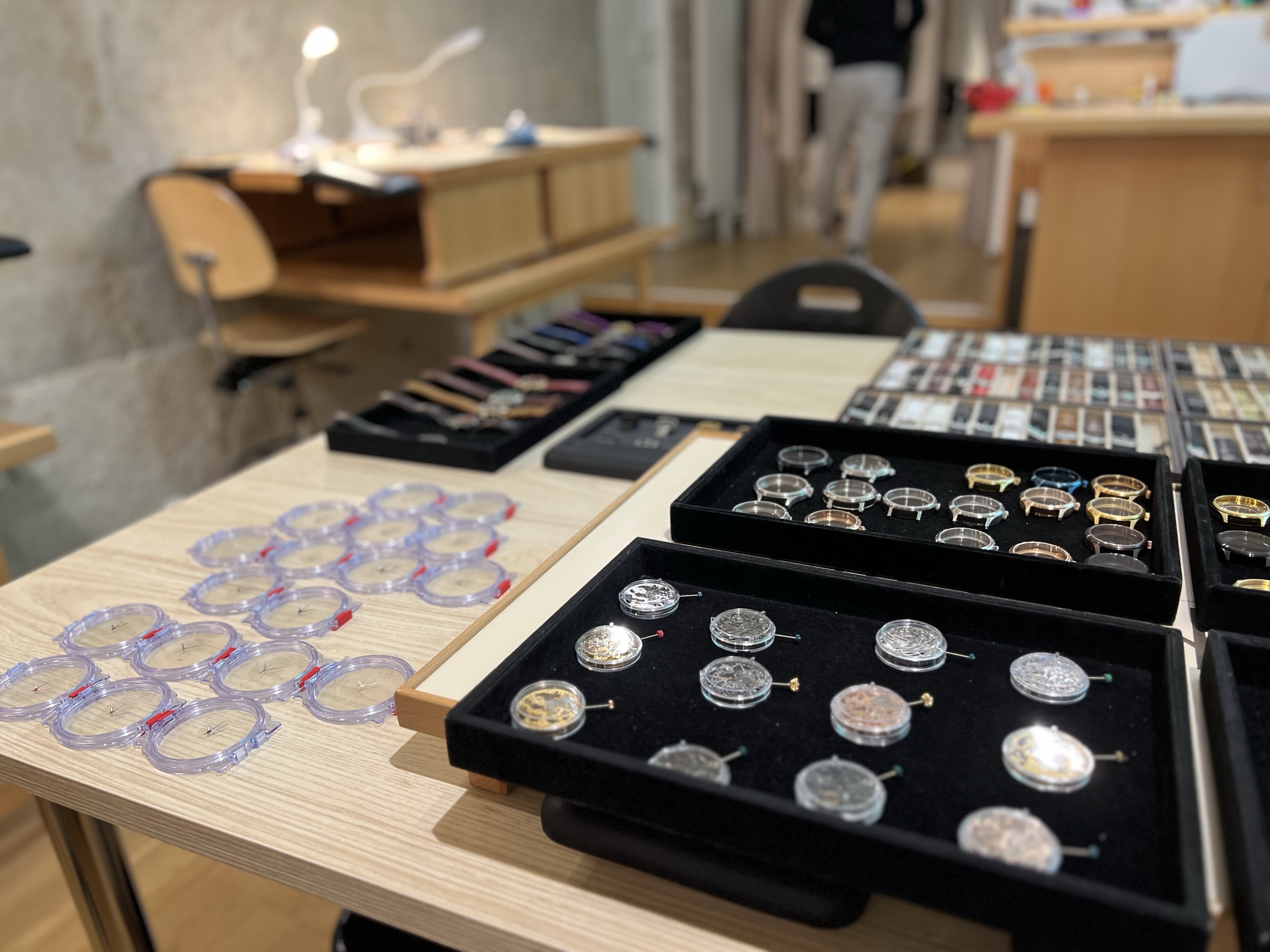
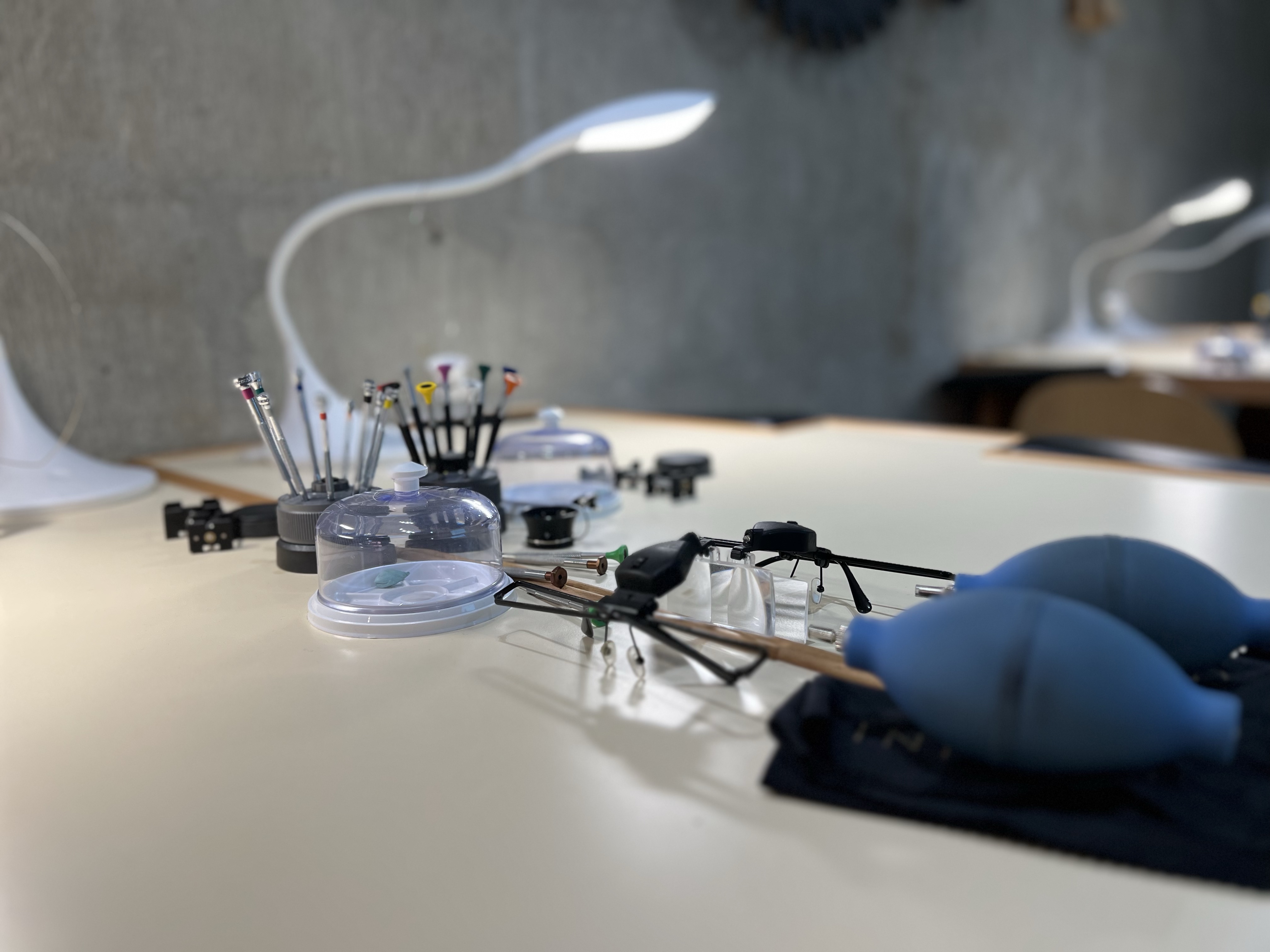
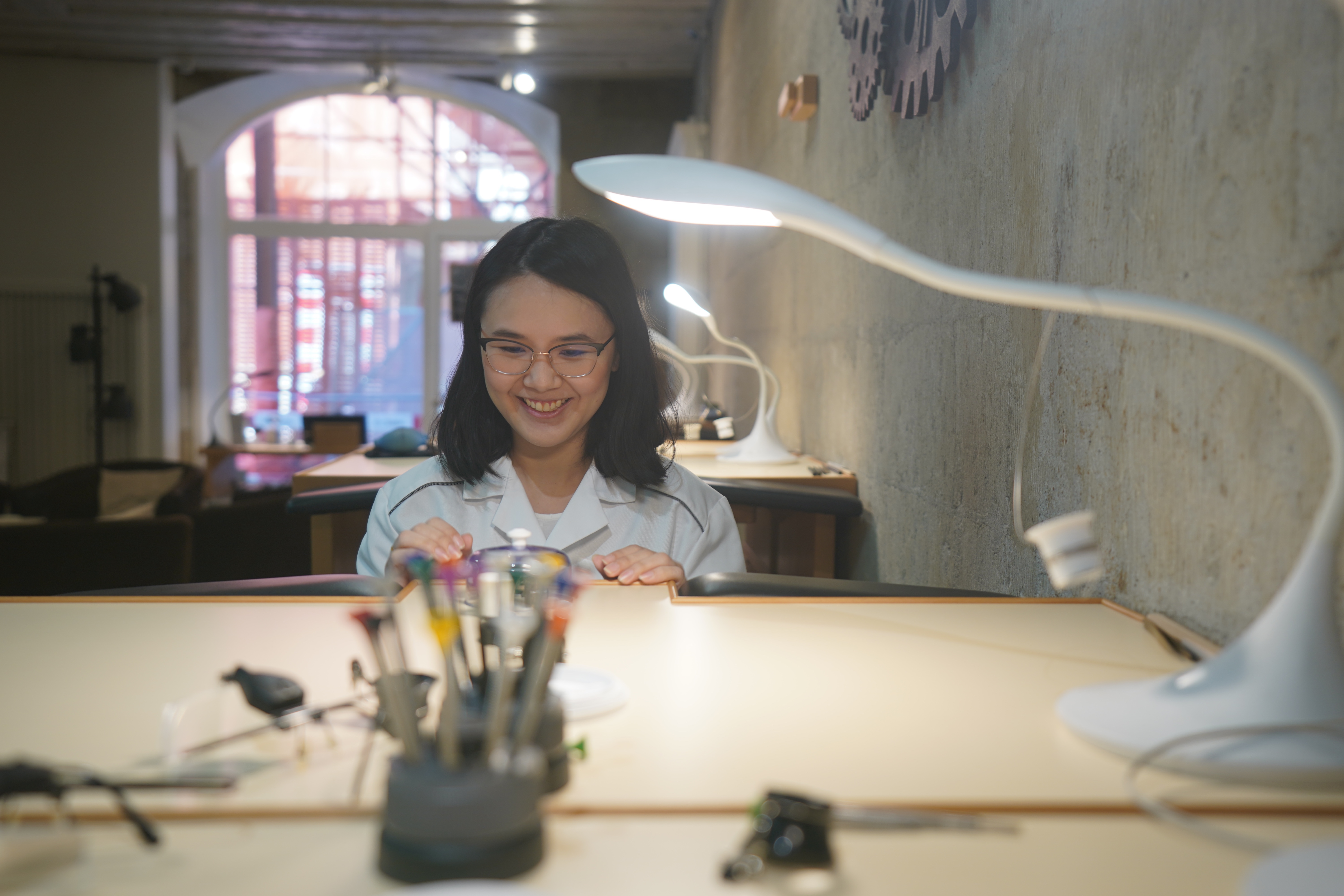
Initium was a workshop spanning approximately 120 square meters. Two tables were already set up with tools for my husband and me, while on the other side, another table displayed various wristwatch designs. Diego and Tamara warmly welcomed us upon our arrival, and before we began our session, we were offered coffee and bread.
Diego, our instructor for the session, had studied Watchmaking and Clockmaking during his education. Despite his youthful appearance and cheerful personality, he possessed a depth of knowledge that one might not expect at first glance. During our casual coffee session, we learned a great deal about the culture of watchmaking and clockmaking.

What we learn about Watchmaking and Clockmaking
Protestant Reformation in Geneva not only gave rise to the Reformation Wall but also played a significant role in establishing Geneva as a hub for luxury watches. Since jewelry-making was prohibited, the Huguenots taught unemployed jewelry makers the art of watchmaking. By combining their materials and expertise, they created luxurious timepieces.
In today’s world, battery-powered watches such as automatic watches and smartwatches have become the norm for most people. As a result, mechanical watches have become increasingly rare for personal use. However, it is precisely the mechanical complexity and exquisite decoration of these timepieces that transform them from being just ordinary watches into valuable works of art that only a select few can truly appreciate. During our practical session, we had the opportunity to delve into the intricate mechanisms that make these watches so special.
Of course, I never come unprepared. Before I booked this workshop, I already learned the anatomy of mechanical watch. This interactive post by Martosz Ciechanowski was handful that I can immediately follow Diego without a hitch. The heart of a mechanical watch lies in its power source, known as the barrel. This barrel contains a tightly wound spring that continuously unwinds and releases energy as our hand moves, ensuring the watch remains powered. The escapement mechanism, responsible for the familiar “tick-tock” sound, regulates the release of this energy and controls the watch’s timekeeping accuracy. Additionally, a series of gears work in harmony to drive the movement of the watch’s hands on the dial.
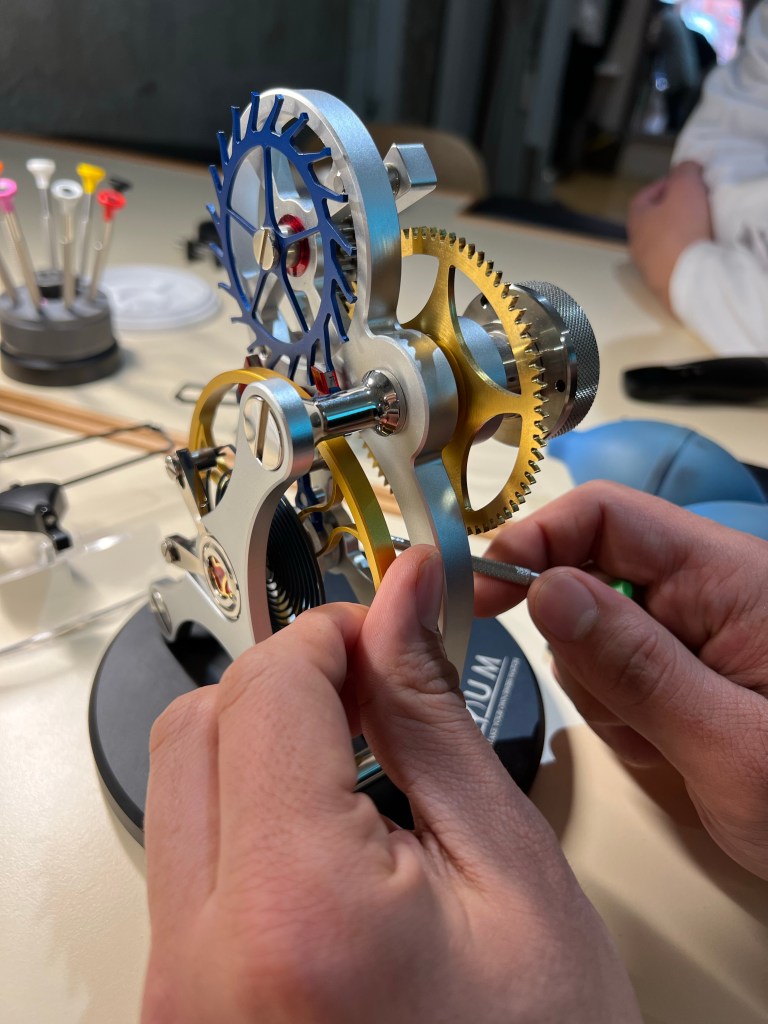
The complexity of a mechanical watch varies depending on its design and features. Some watches can be exceptionally intricate, such as the remarkable timepiece created by Breguet, which boasts an astounding 800 gears. These gears, meticulously engineered and arranged, contribute to the watch’s precision and functionality, making it a testament to the skill and craftsmanship of the watchmaker.
Each individual component within a mechanical watch serves a specific purpose, working together to ensure accurate timekeeping and a smooth, continuous motion. It is the careful assembly and synchronization of these components that bring a mechanical watch to life and make it a marvel of engineering.
Practical Session
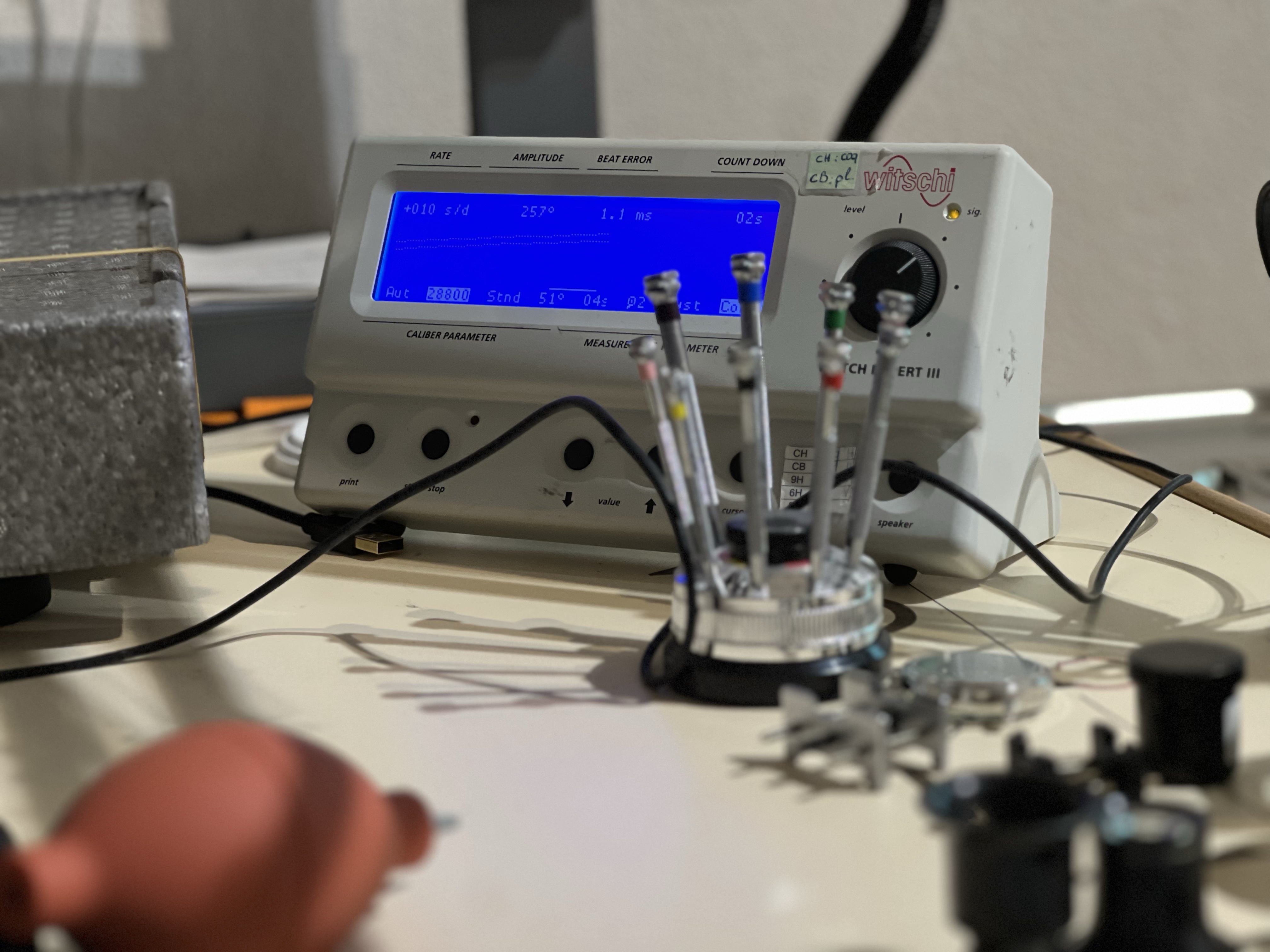
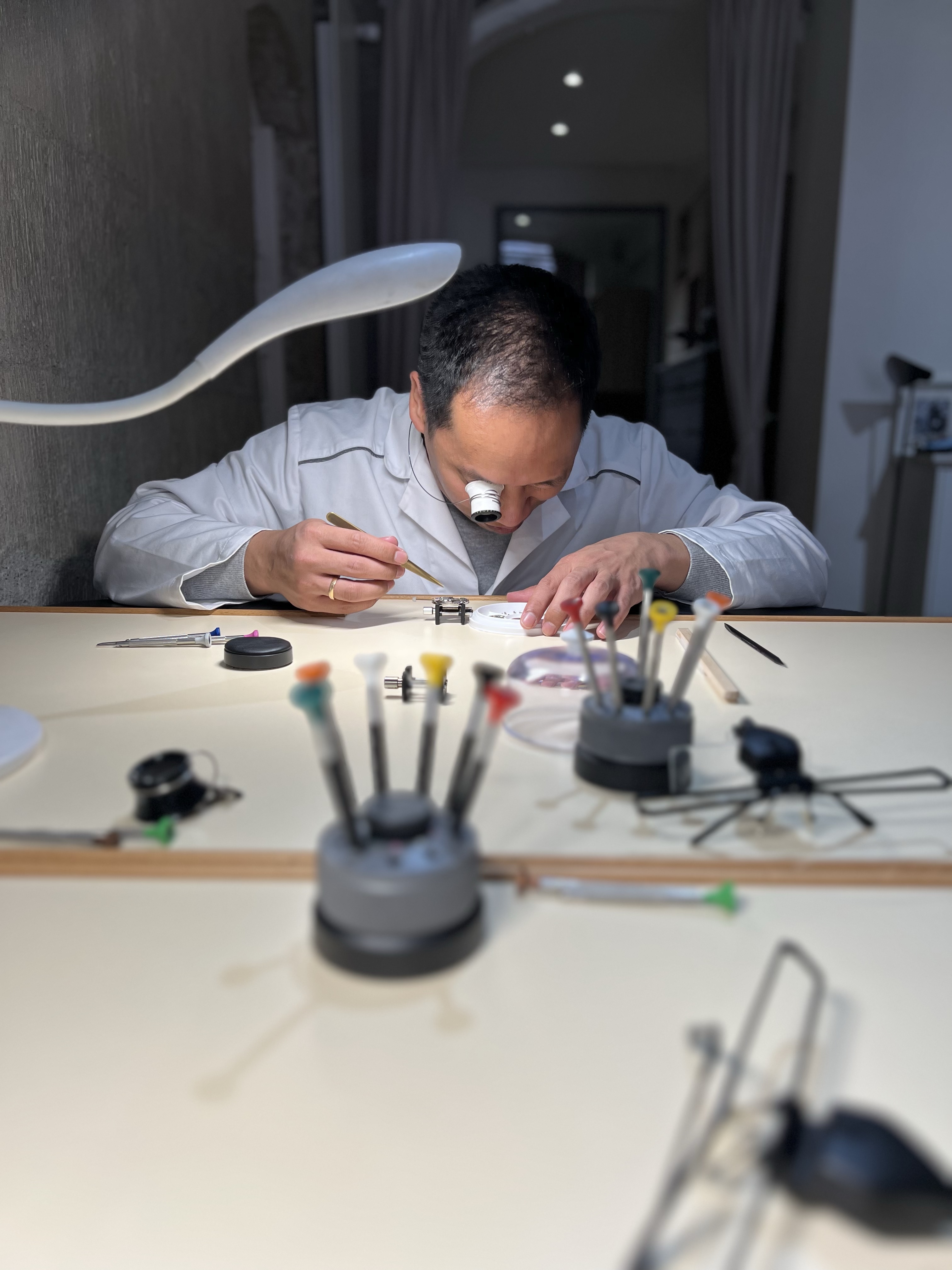
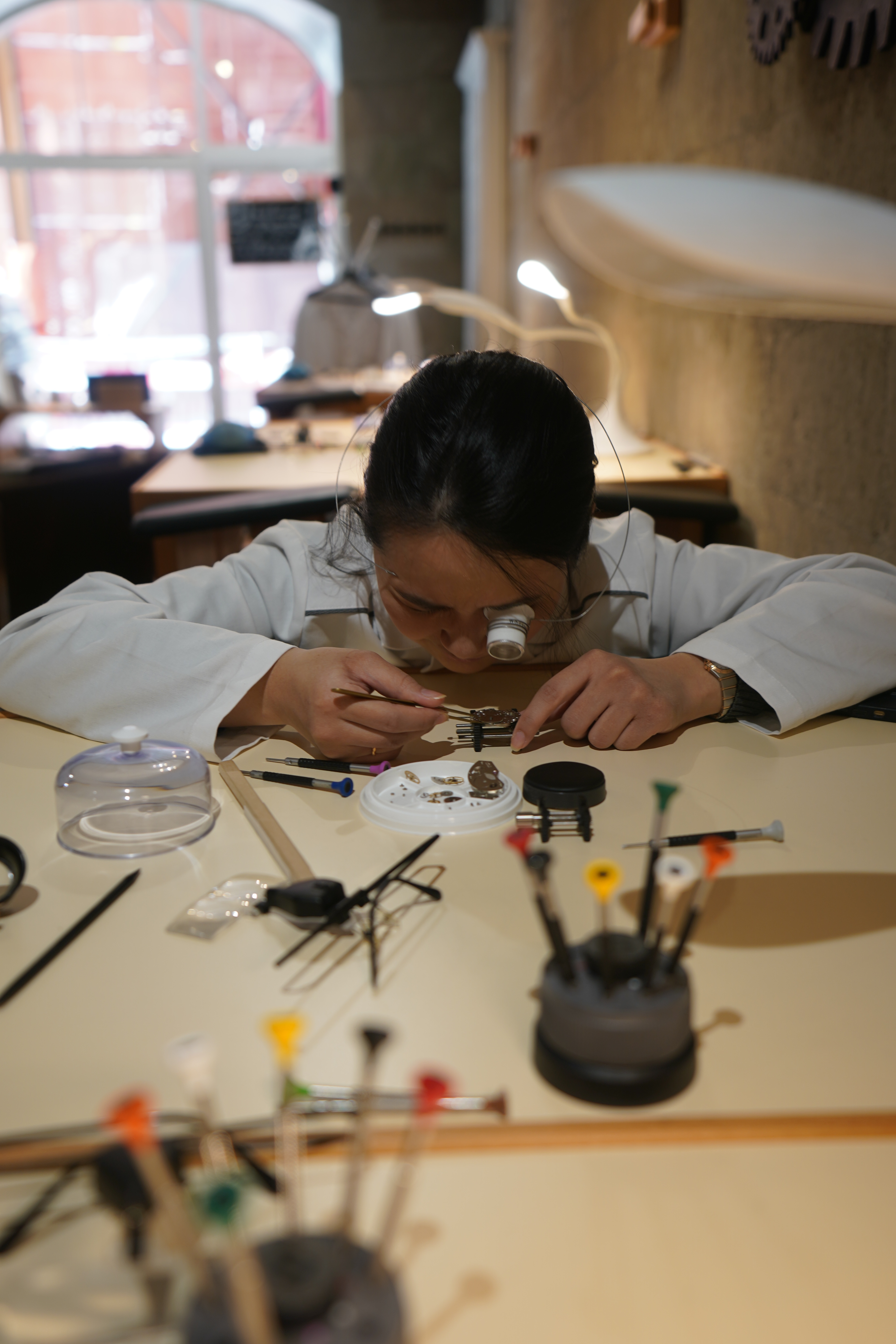
After the theory session, came the best part of the workshop: Assembling and Disassembling watch. My husband and I were given plate with the diameter size approximately 50 mm. Diego instructed us how to place the components and explained the purpose of each parts including how it works. We were being told the watch is the common size for man’s watch. To my surprise, the microscopic size parts that required to be placed with excellent dexterity is what makes the craftmanship is difficult. I am wearing Omega constellation which its diameter approximately 24mm, I cannot imagine how microscopic the parts inside of my watch could be. My near-sighted condition added the difficulty while placing the parts. My husband, on the other hand, managed to place them with perfect precision. Diego kept compliment my husband’s surprising skill as ‘A rare talented first-timer’. I am both proud but also jealous of my husband.
My own interpretation about the future of watchmaking
Rebecca Struthers wrote in ‘Hands of Time: A Watchmaker’s History of Time’: We watchmakers are not generally ‘cool’ people. We’re the engineers of a bygone era who spend most of our day indoors working on eye-strainingly small objects with little to no human contact.

The design of modern watches has indeed evolved to embrace sustainability and environmental friendliness. Watchmakers are increasingly conscious of the impact their products have on the environment and are implementing measures to reduce waste, use eco-friendly materials, and improve energy efficiency. This shift towards sustainability is reflected in the choice of materials, such as recycled metals or responsibly sourced components, and the implementation of energy-saving technologies.
Additionally, the rise of digitalization has brought about the emergence of smartwatches, which have captured the attention of today’s generation. Smartwatches offer functionalities beyond simply telling time. They are equipped with advanced features such as heart rate monitoring, fitness tracking, and the ability to receive notifications from mobile devices. This integration with technology allows users to stay connected, track their health metrics, and receive important updates on the go.
The appeal of smartwatches lies in their versatility and convenience, as they offer a range of functionalities in a compact and stylish package. This adaptability to the digital age has made smartwatches a popular choice among consumers who seek both practicality and connectivity in their timepiece.
Mechanical watch is unfortunately very expensive. Only few people can afford to own it. The affordability and the functionality in smartwatch offers more to today’s generation need. Thus in order to preserve the art of watchmaking and clockmaking, it is important to share this skill to newer generation. Thus, come to Geneva and visit Initium!
 A Cup of Think