
The happiest country on Earth
Nestled among India, Bangladesh, Nepal, and China, Bhutan is landlocked and without beaches. Instead, its rugged terrain is dominated by mountains, limiting agriculture (also making it challenging for pilot to land a plane). As a result, many goods are imported from India. The landscape is untouched by the extravagance of towering skyscrapers.
Thimphu’s market has recently been renovated—fresh, but far from modern. There are no robots whizzing around like in Singapore, nor any NFC cards for payments. Transactions here are simple, reflecting a way of life that values tradition over technology.
It’s no surprise that Bhutan is often called the happiest country on Earth.
My husband asked our guide, Ghezang, “How do you measure happiness?”
Ghezang smiled and replied, “Most of us are Buddhists. In Buddhism, we believe in reincarnation. So, the government asks a simple question in a survey: ‘In your next life, would you want to be born in Bhutan again?’”
In Bhutan, happiness isn’t tied to the pursuit of technology or rapid growth. Instead, they embrace contentment, harmony with nature, and a slower, more meaningful way of life.
Bhutanese Archery
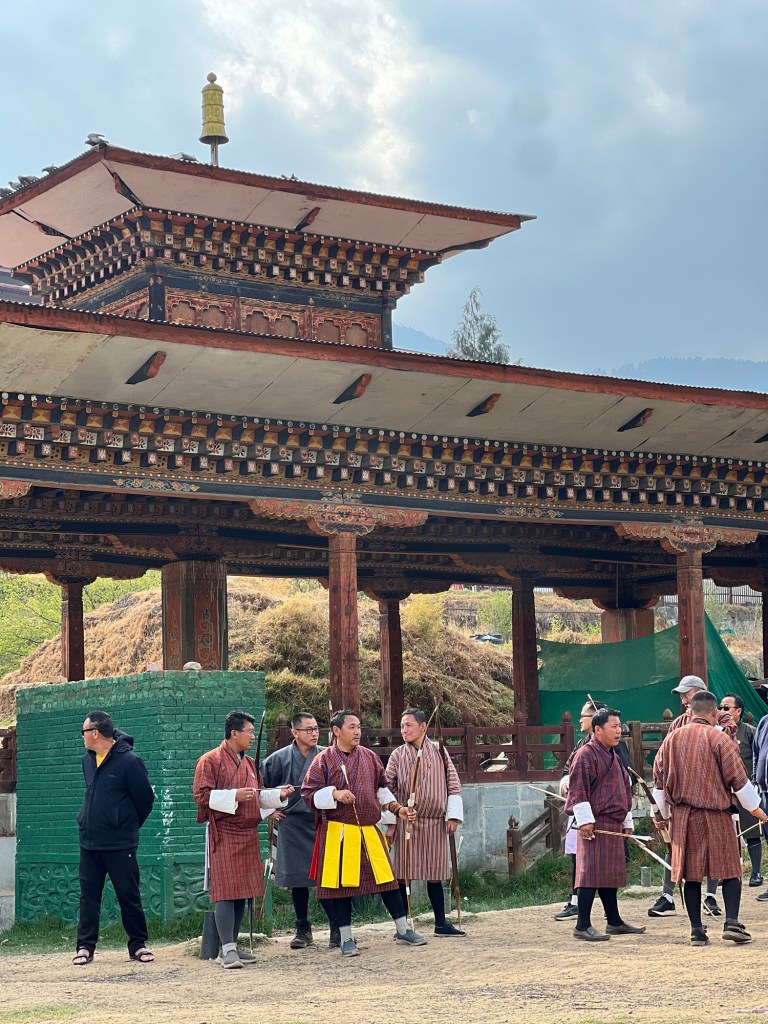
Just near Thimphu’s market, we came across a field that is apparently used for Bhutanese archery. At that time, there was no official match like the Olympics or a national competition, but a recreational match was taking place. We, as tourists, were lucky enough to be allowed to watch the game.
There is nothing extraordinary about the rules of Bhutanese archery, except for its astonishing distance. There is no additional gear to support the player. The target can be placed hundreds of meters away from the archer (I doubt my eyesight works well beyond 7 meters). The game is played in groups, with each group having its own target. They aim for the opponent’s target—much like in basketball or football. When an arrow hits the target, whether it lands on the bullseye or not, the opposing team must perform a dance to celebrate the winner’s shot, which is the highlight of the sport.
Our experience with Bhutanese Archery
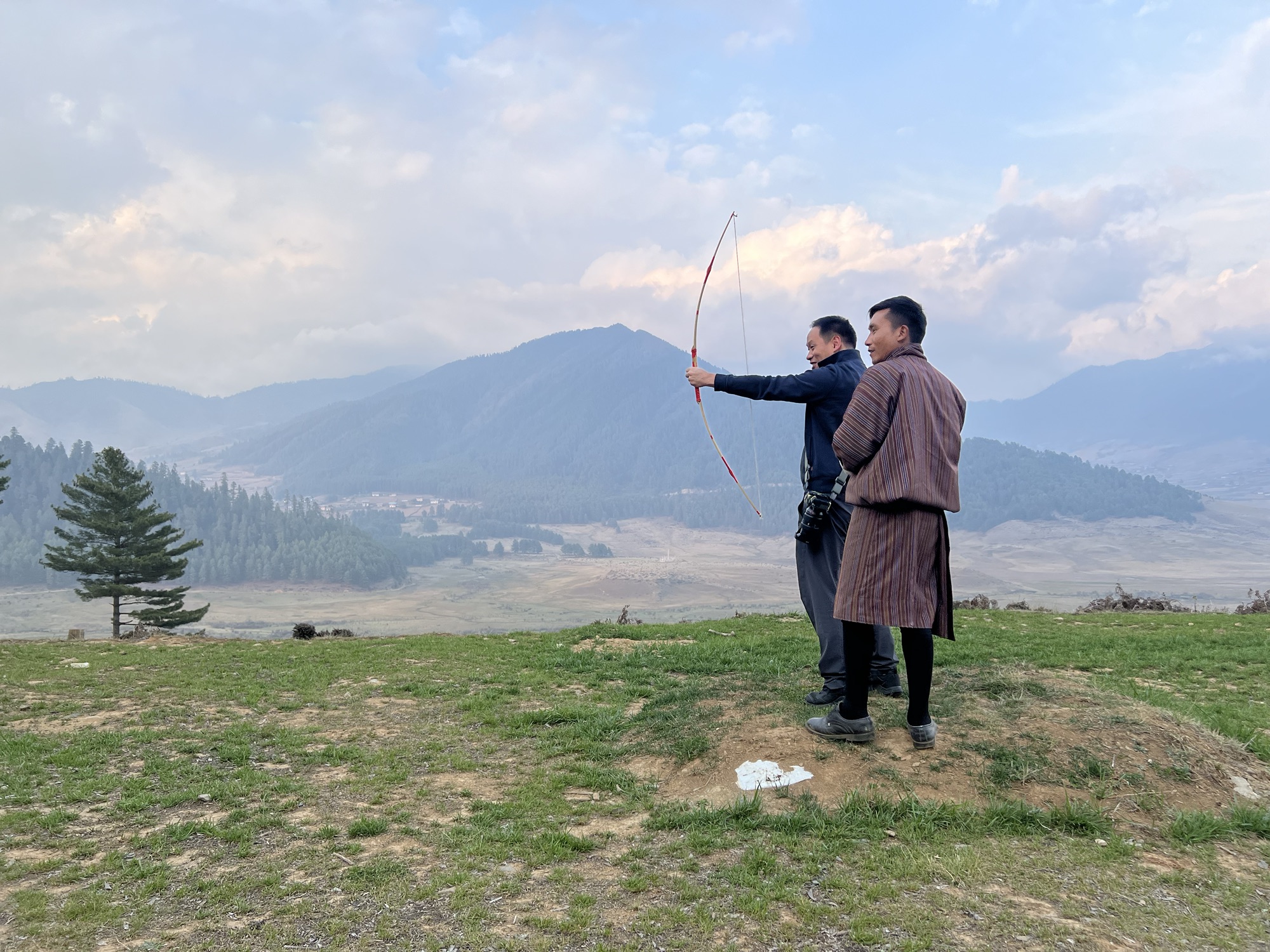
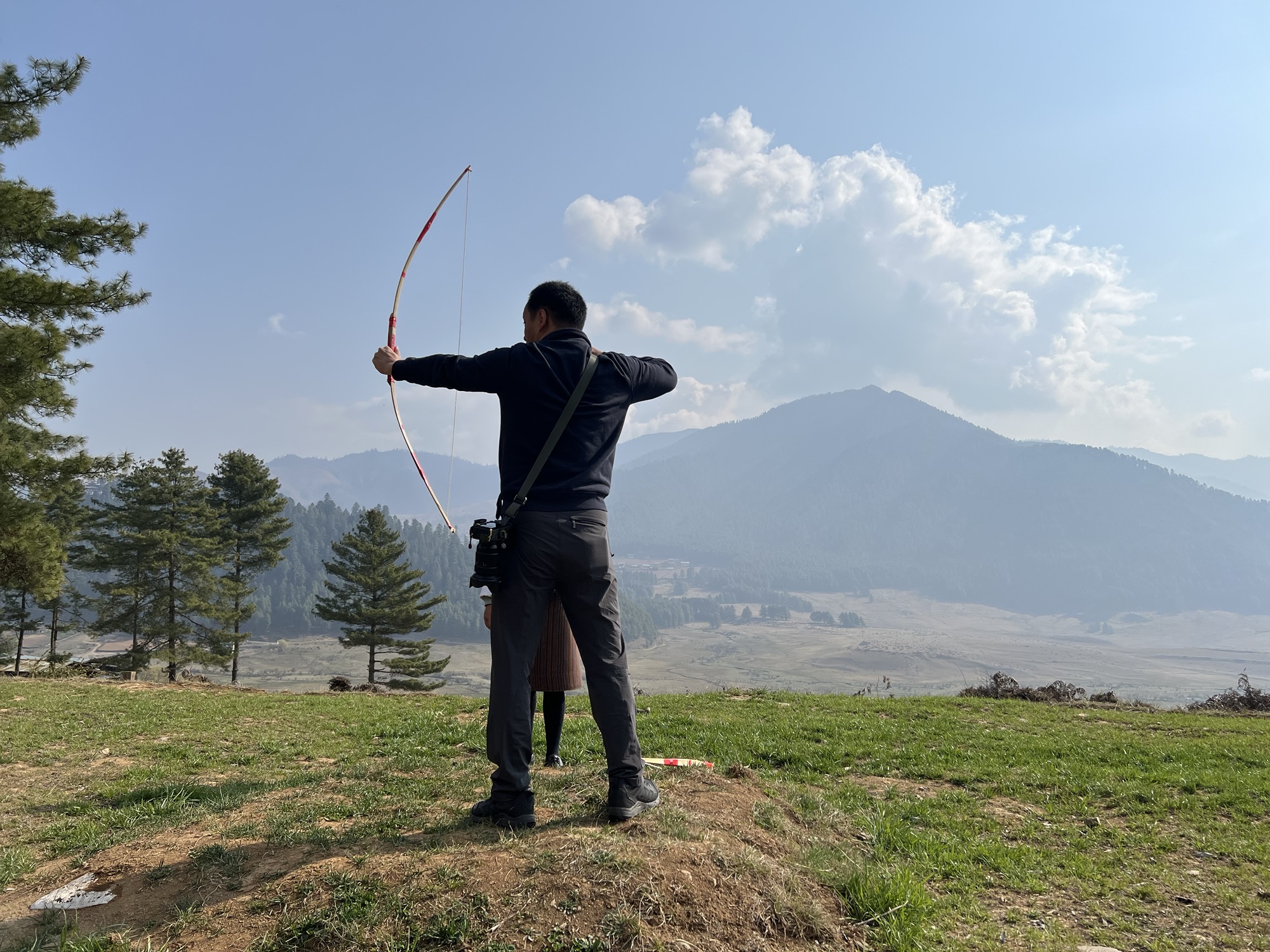
As a former archery student, I tried to maintain proper posture. My husband, however, has never taken an archery class. His posture was far from perfect, even after I tried to help him adjust it. But to my surprise, his shot hit the target. No one criticized his form—instead, dancers erupted in cheers, celebrating his arrow landing on the target.
At the Japanese company where I work, I learned about the philosophy behind Japanese archery (Kyūdō). In Kyūdō, the focus is on the process rather than the result. Whether the arrow hits the target or not, the act itself is considered a success because of the dedication and intention behind it.
Reflecting on Bhutanese archery, I realized their emphasis lies in hitting the target, even if it doesn’t land on the bullseye. The technique doesn’t matter as much—it’s the outcome that counts.
So, which matters more to you: mastering the process or hitting the target?

 A Cup of Think