
It’s Official! I’m Taking Japanese N5 Courses!
I’ve wanted to learn Japanese for so long, but honestly, Kanji intimidated me. I wasn’t sure if I could memorize as easily as I used to—especially now that I’m a mom, with limited time to practice. Then, one day, I casually mentioned my desire to learn Japanese at work, and my boss immediately responded, “YES, PLEASE! Someone needs to learn Japanese to communicate with our Japanese colleagues!” That gave me an extra push. Later, I spoke with my husband’s cousin (who was an international student in Japan) about taking Japanese classes and shared my worries about Kanji. His response was “No worries! Even numbers 1 to 100 are Kanji—you’ll get the hang of it!” That made it feel much more manageable. Then, my sister’s reaction when she found out I enrolled in a class: “We can practice together!“ I feel so lucky to be surrounded by people who motivate and encourage me. With all this support, I finally committed to taking Japanese classes starting this February. The Kyoushi (teacher) is so nice, and to my surprise, I’m picking up the language quickly! Thanks to my self-study, I already know most of the Hiragana and some basic expressions and vocabulary. It feels amazing to finally be on this journey!
I grew up reading manga and watching anime, have worked in a Japanese company for seven years, have so many Japanese neighbours, love Japanese culture and food, and have traveled to Japan three times. So, it feels only natural for me to start learning Japanese. Proud Wibu here!
This is the sixth language I’m studying (including my mother tongue), and I have to say—Japanese has the most interesting learning resources among them all. Maybe it’s because the language is so loved; there are countless posts, books, and materials that make studying it fun and engaging—never boring!
In this post, I’ll share my favorite resources for practicing Japanese. Douzo!
Website
Tofugu
In Tofugu, there are Japanese grammar, mnemonics, flashcards and quiz that you can practice. It is so visually appealing. Furthermore, in Tofugu, they don’t just teach Japanese, they write about Japanese cultures which are interesting to read.

JLPT Sensei
JLPT Sensei is suitable for serious Japanese learner. You might not expect any other entertainment like in Tofugu. However, it is so structured and detailed, new Japanese learner won’t find it difficult to follow.

Textbook
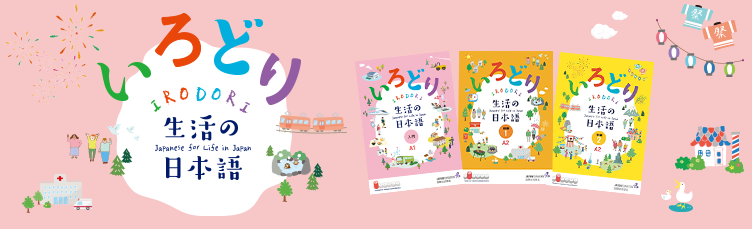
Irodori-Japanese Foundation
I first discovered this book when my husband took me to a Japanese library in Jakarta. I randomly picked it up and was immediately hooked! Fortunately, it’s also available for Indonesian students. (In my opinion, learning an Asian language through Bahasa Indonesia is easier than in English, as the pronunciation feels more familiar.)
What I love about Irodori is that it doesn’t just teach the language—it also introduces Japanese traditions, culture, and even bits of wisdom. It’s an immersive experience that helps you understand Japan beyond just words. While I don’t use this book in my class, I still practice with it religiously.
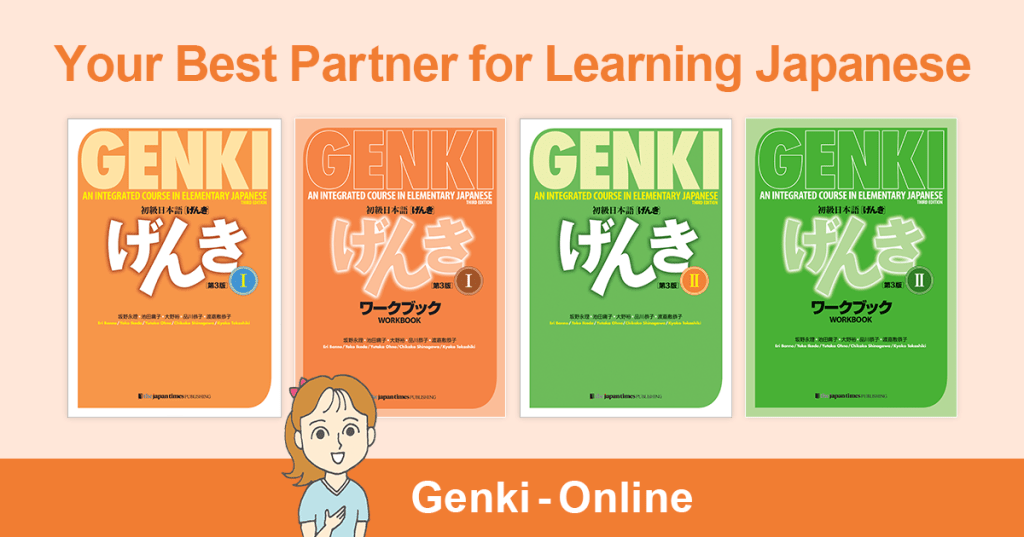
Genki
I owe a big thanks to my high school friend (who is a language teacher) for introducing me to this book. While my class uses Minna no Nihongo, which my friend also approves of, Minna no Nihongo is entirely written in Hiragana, Katakana, and Kanji. I get that this helps learners get used to Japanese script without relying on Romaji, but sometimes, you just want a more relaxed study session.
That’s where Genki shines. It’s detailed and structured yet never intimidating. It also teaches important nuances, like distinguishing between formal and informal expressions—an essential aspect of Japanese culture.
Japanese Kanji Mnemonics JLPT- Lindsay Jimenez & Dioxelis Lopez
I actually discovered the JLPT Mnemonics Instagram account before the book—and it’s hands down the best resource for learning Japanese Kanji! Both the book and the Instagram account make Kanji easier to remember by associating characters with visual illustrations. My favorite part is seeing how two Kanji combine to form a completely new word. It just makes so much sense!
I’m not sure if this is just the honeymoon phase—where everything feels exciting because it’s new—but I’m truly enjoying learning Japanese. With manga and anime everywhere, I can practice effortlessly, making the learning process feel natural rather than forced.
Right now, I’m still at N5, and since each stage takes about 1.5 years, I know I’m far from fluent. But I’m happy with my decision to take this course.
This collection are based on my own findings. There are probably more resources that are equally fun but I never explore. So, do you have any other recommendations?
Hajimemasu!
 A Cup of Think